For NVH engineers, acoustics researchers, industrial monitoring teams, and building security specialists, the challenge of measuring vibration and sound has always been one of trade-offs.
Working on a remote acoustic or NVH measurement?
Tell us the target, frequency range, stand-off distance and whether you need point, full-field or 3D vibration data. We will help identify the practical workflow.
Traditional tools, such as accelerometers, microphones, and strain gauges, can provide valuable point data, but they are:
- Intrusive
- Time-consuming to install
- And often alter the dynamics they are meant to observe
In high-stakes environments such as aerospace structural testing or transformer monitoring, those limitations introduce risk, cost, and uncertainty.
This is where non-contact sensing, and specifically Laser RADAR combined with optical vibrometry, is helping to redefine the field we work in.
This article explores how laser-based remote sound sensing works, why it matters, and how organisations are using Ommatidia’s Q2 Laser RADAR platform.
Why Non-Contact Vibrometry Matters
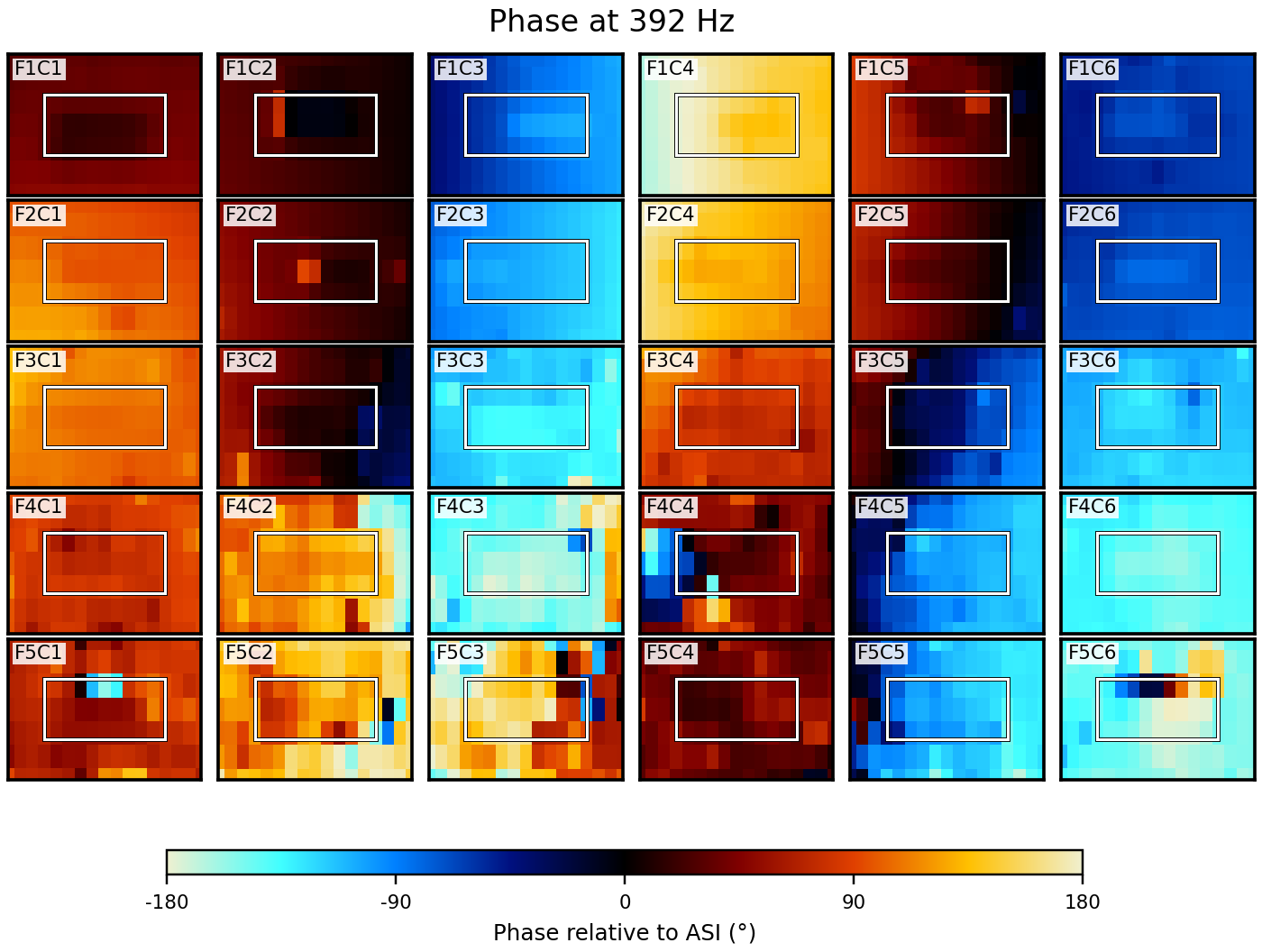
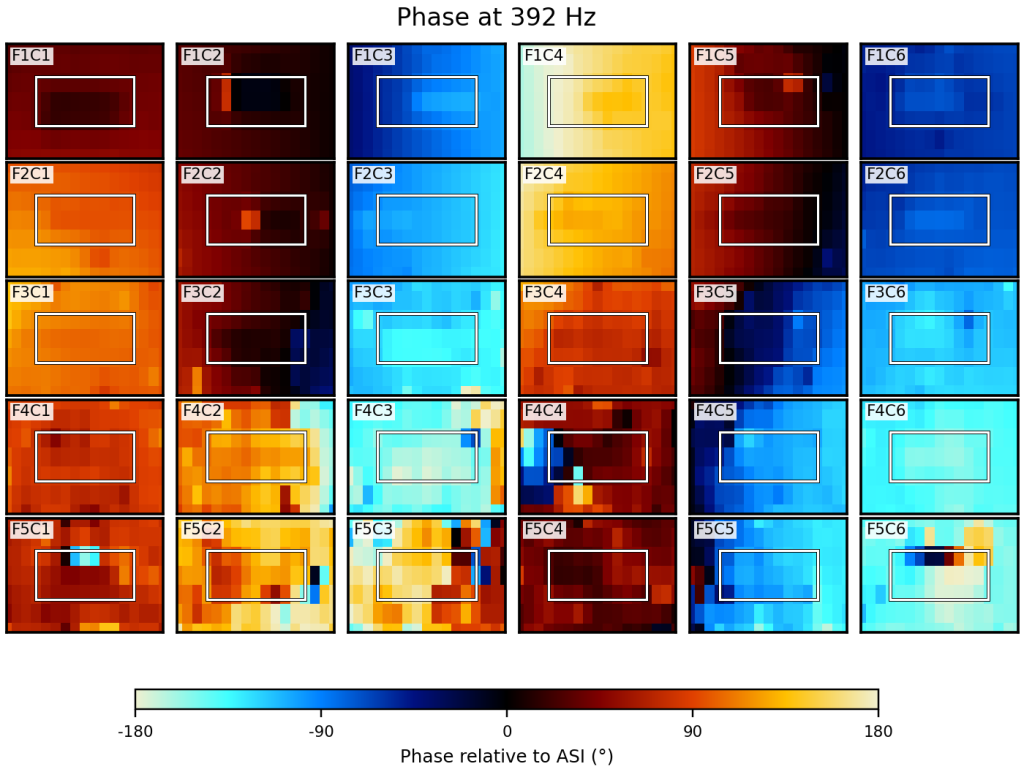
Traditional accelerometer or microphone-based methods face three critical issues: Using interferometry and FMCW LiDAR principles, the Q2 measures displacement, vibration, and acoustic signatures remotely. This approach improves accuracy and enables large-scale surveys that are impractical with conventional sensors. Vibration maps for detected peak frequencies The Q2 Laser RADAR is designed for applications that demand precision and scalability. It integrates high-accuracy 3D metrology with advanced vibration sensing to replace multiple instruments with a versatile platform. Key specifications include: The Q2 also integrates seamlessly with Industry 4.0 architectures, offering autofocus, angular scanning, and an RGB camera for intuitive programming and visualization. Learn More About the Q2 Laser RADAR → The Q2 Laser RADAR addresses a wide range of technical use cases: Full-field vibration maps reveal resonance, damping, and aeroelastic effects in automotive and aerospace structures without mass loading. In rotating machinery, transformers, or production lines, the Q2 delivers remote monitoring (without downtime) and supports early fault detection. Researchers studying façade vibration, traffic-induced noise, or barrier performance access full-field acoustic behavior without microphone arrays. Remote sound sensing provides standoff monitoring capabilities for high-security facilities, enabling vibration and acoustic analysis. Q2 Laser Radar enables NDT capturing of high-resolution vibrometry data These examples highlight how the Q2 Laser RADAR provides non-intrusive, scalable, and high-resolution insights. Explore More Applications Here → Q2 Laser Radar reveals vibrations on the aluminum aircraft part in real time The future of remote sound sensing will be defined by three advances: With improvements in FMCW LiDAR and real-time point cloud processing, combined with vibrometry algorithms, systems like the Q2 will deliver richer datasets, faster test cycles, and greater sensitivity. This makes Laser RADAR a core tool for NVH, acoustics, and structural monitoring. For teams responsible for vibration testing, modal analysis, structural health monitoring, or building acoustics, the Q2 Laser RADAR represents a change in capability. By unifying optical vibrometry with high-speed laser radar scanning, it delivers the precision and efficiency needed for today’s most demanding projects. To learn more about demonstrations, on-site trials, or integration with your current metrology and analysis workflows, contact our experts at Ommatidia. Visit ommatidia.tech or email sales@ommatidia.tech. Combine mapas remotos de vibração superficial e referências acústicas sincronizadas para conectar o movimento estrutural ao campo sonoro. O Laser RADAR captura a distância a velocidade de vibração na linha de visada de painéis, membranas, invólucros e estruturas visíveis. Quando o campo acústico excita o alvo, o movimento superficial medido revela onde e como a estrutura responde e fornece formas de vibração espaciais e velocidades para a engenharia acústica. Uma superfície vibra e irradia ou responde ao som conforme modos, contornos, material e excitação. Medir muitos pontos simultaneamente mostra padrões espaciais, regiões ressonantes e transientes. Adicione microfone, força, rotação ou referência temporal quando precisar correlacionar pressão sonora, ordens operacionais ou excitação conhecida. O Q2 oferece 65 canais ópticos simultâneos e até 1.300 pontos com sobreamostragem espacial de 20×. Os sistemas Q-Series medem velocidade de vibração até ±155 mm/s e colocam os dados na geometria medida. Acesso óptico, retorno, distância, faixa de movimento e qualidade da referência determinam o resultado. O Laser RADAR fornece dados densos de movimento superficial sem contato, enquanto os microfones fornecem referências sincronizadas de pressão e nível sonoro no ar. Juntos conectam o campo sonoro ao movimento da estrutura remota; tempo, coordenadas e calibração compartilhados apoiam identificação de fontes, análise de caminhos de transferência e projeto acústico.

Technical Specifications: What the Q2 Delivers

Where the Q2 Laser Radar Makes an Impact

Field-Tested Performance
Transformer and Substation NVH
Building Acoustics and Façade Surveys

Looking Ahead: The Future of Laser RADAR
Final Thoughts
Perguntas sobre detecção remota de som
O que o Laser RADAR captura na análise acústica remota?
Como a vibração superficial ajuda na análise acústica?
O que o Q2 oferece em medições acústicas remotas?
Como Laser RADAR e microfones trabalham juntos?
Compartilhar