Explore how teams use our technology in real-world scenarios through company-developed application examples and selected customer case studies. These application notes highlight the challenge, the approach, and the outcomes, with practical details you can apply to your own work.
You’ll find concise overviews of the context, the measurement setup, and the key decisions that shaped each solution, along with validated results and performance improvements. Whether you’re evaluating options, planning a pilot, or extending an existing workflow, these examples are designed to help you compare approaches, avoid common pitfalls, and move faster with confidence.
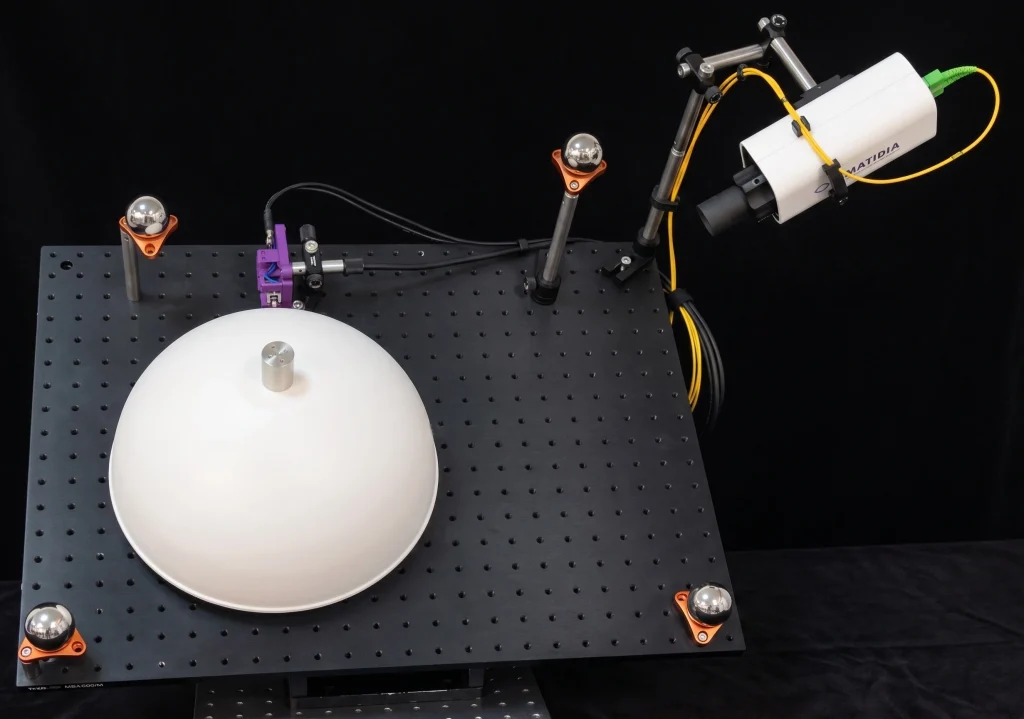
Measurement and Analysis of Chirp Acoustic Signals
This work explores the measurement and analysis of chirp acoustic signals using the Ommatidia Q2 Laser Doppler Vibrometer. With its non-contact, high-resolution vibration sensing, the Q2 enables accurate capture of acoustic responses over a wide frequency range, making it a powerful tool for advanced acoustic testing and diagnostics.Vibration Measurement on Low-Reflectivity Automotive Materials
Ommatidia’s Q2 Laser Doppler Vibrometer proves its ability to measure vibration on dark, porous automotive materials—surfaces that typically defeat conventional optical systems. This demonstration shows stable, full-field, non-contact measurements without surface preparation, enabling more accurate NVH and interior acoustic validation.Monitoring Bridge Deflection with Ommatidia’s Q-Series Laser Doppler vibrometer
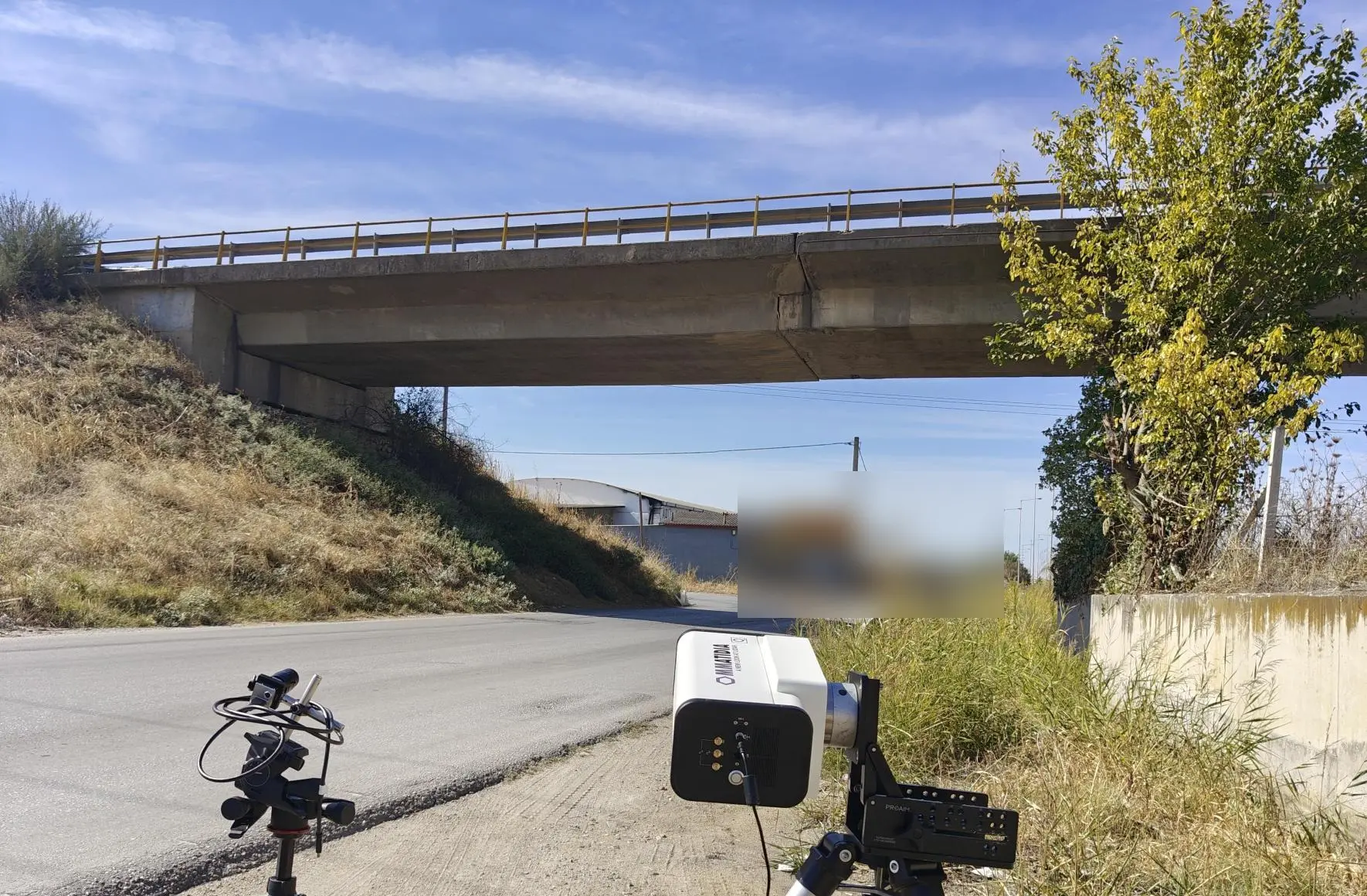
Ommatidia’s Q-Series Laser Doppler vibrometer brings interferometric precision to bridge monitoring and structural health management. Using massively parallel FMCW LiDAR and photonic integration, it measures deflection and vibration across entire bridge spans — without contact or traffic disruption. From live-load deflection tests to digital twin development, the Q-Series enables scalable, real-time insight into infrastructure performance and safety.How Our SpeckleGuard™ Technology Minimizes Noise
Speckle noise has long limited the accuracy of coherent laser vibrometry, especially on rough or composite surfaces. Ommatidia LiDAR’s SpeckleGuard™ technology tackles this challenge using compound aperture diversity and real-time fusion to stabilize velocity measurements across multiple beams. The result is cleaner data, higher measurement coherence, and reliable vibration analysis without surface preparation—even in demanding industrial or research environments.Vibration Analysis of PCBs for Critical Applications
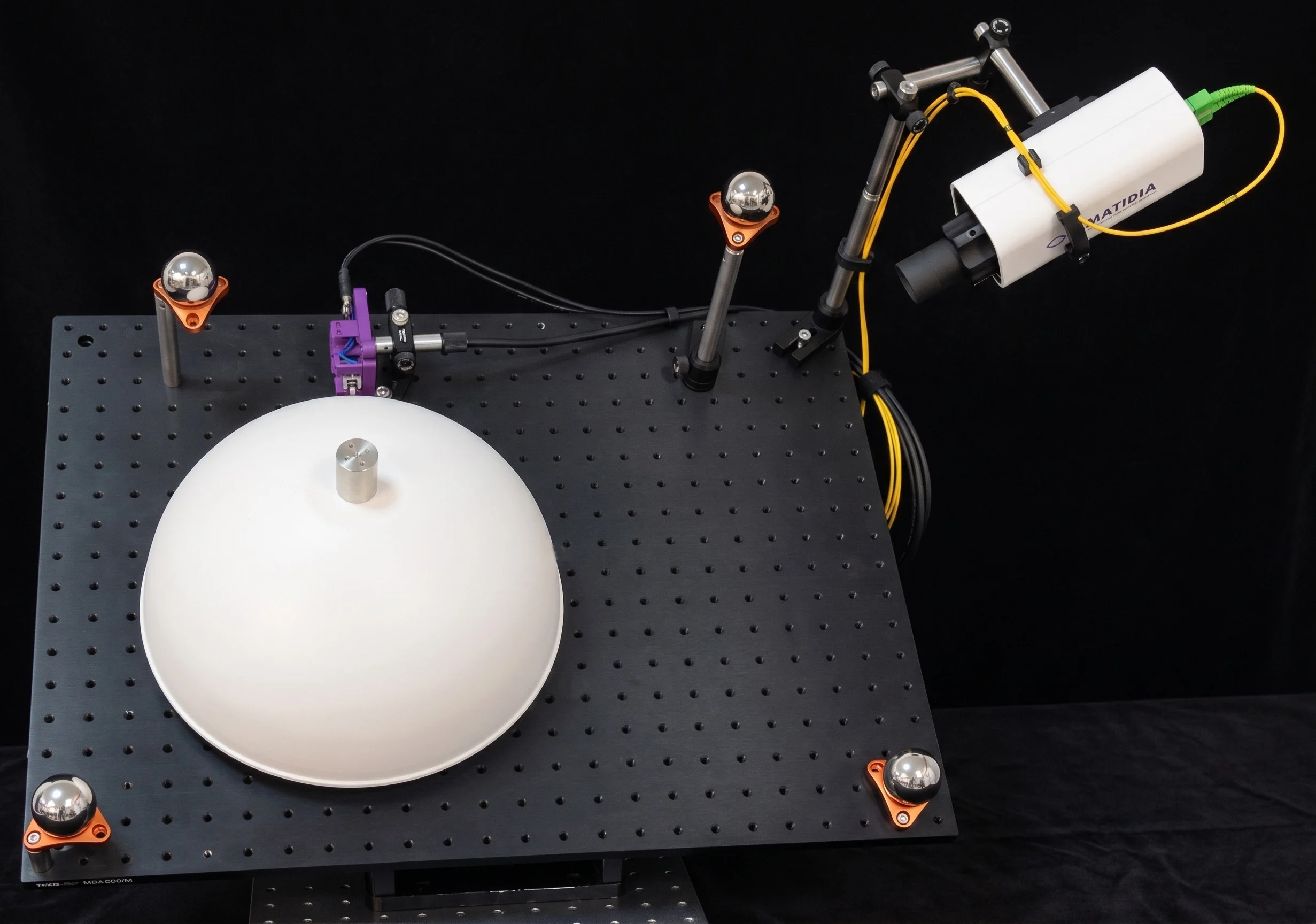
Printed circuit boards used in space, defence, aeronautics, and transportation must endure extreme vibration without failure. Traditional accelerometer-based testing can’t reveal how individual components behave under load. Ommatidia’s massively parallel Laser Doppler Vibrometry (LDV) and Laser RADAR technology enable non-contact, high-resolution vibration analysis across entire PCBs—identifying failure-prone areas, validating designs, and ensuring reliability in critical applications.Full-Field Quantitative Modal Analysis in 20 Minutes: A Complete Workflow Guide
Traditional modal analysis can take days of setup and scanning to capture vibration data point by point. With Ommatidia LiDAR’s Q2 Laser RADAR, full-field quantitative modal analysis is completed in just 20 minutes. This walkthrough explains how parallel-beam laser radar delivers precise, non-contact 3D metrology and vibrometry across hundreds of points simultaneously—transforming how researchers, engineers, and testing labs measure structural dynamics.Parallel Beam Laser RADAR: Benefits Over Scan Systems
Traditional scanning laser vibrometers capture one point at a time—slowing down measurements and missing critical vibration data. Parallel Beam Laser RADAR changes that. Using photonic integrated circuits to generate dozens of simultaneous laser channels, Ommatidia LiDAR’s Q1 and Q2 systems deliver faster, more accurate, and fully synchronized vibration and metrology measurements for aerospace, automotive, and industrial applications.Remote Sound Sensing with Laser RADAR: How the Q2 Redefines Vibration and Acoustic Analysis
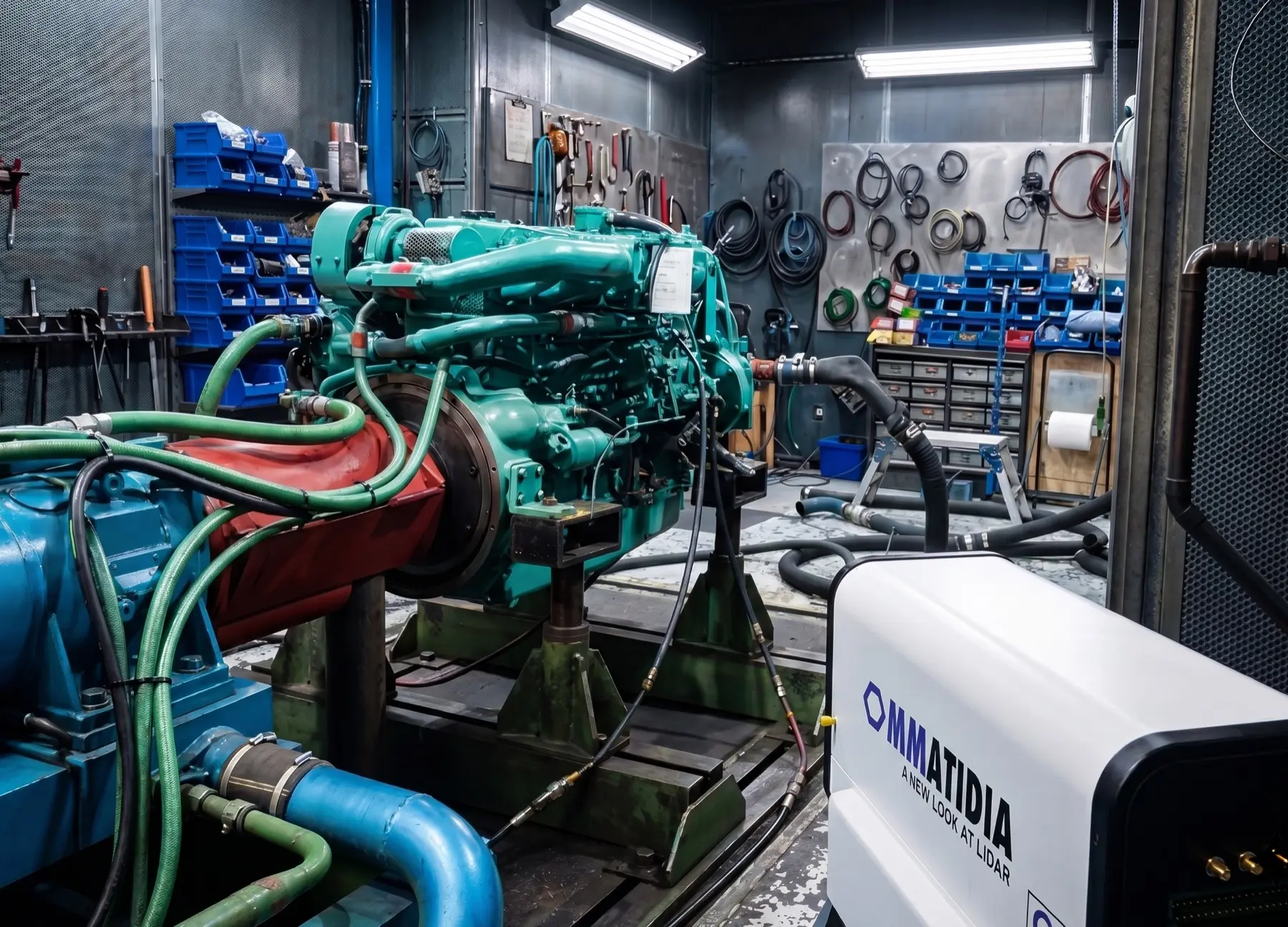
Remote Sound Sensing with Laser RADAR introduces a new way to capture acoustic information — not with microphones, but with light. Using Ommatidia LiDAR’s massively parallel FMCW technology, sound waves and vibrations can be detected remotely through precise laser interferometry. This enables real-time, contact-free analysis of structures, machinery, and environments, unlocking new possibilities in industrial diagnostics, aerospace testing, and acoustic research.