SEE MORE · KNOW MORE
Industrial metrology and remote vibrometry. One field-ready system.
When Q1 is the right fit
Large-target measurement confidence
You need metrology-grade measurement across large or hard-to-access targets.
Geometry and vibrometry together
You want one system for geometry review and vibration insight instead of separate toolchains.
Less setup friction
You need faster qualification than contact-heavy or repeated repositioning workflows allow.
Real deployment conditions
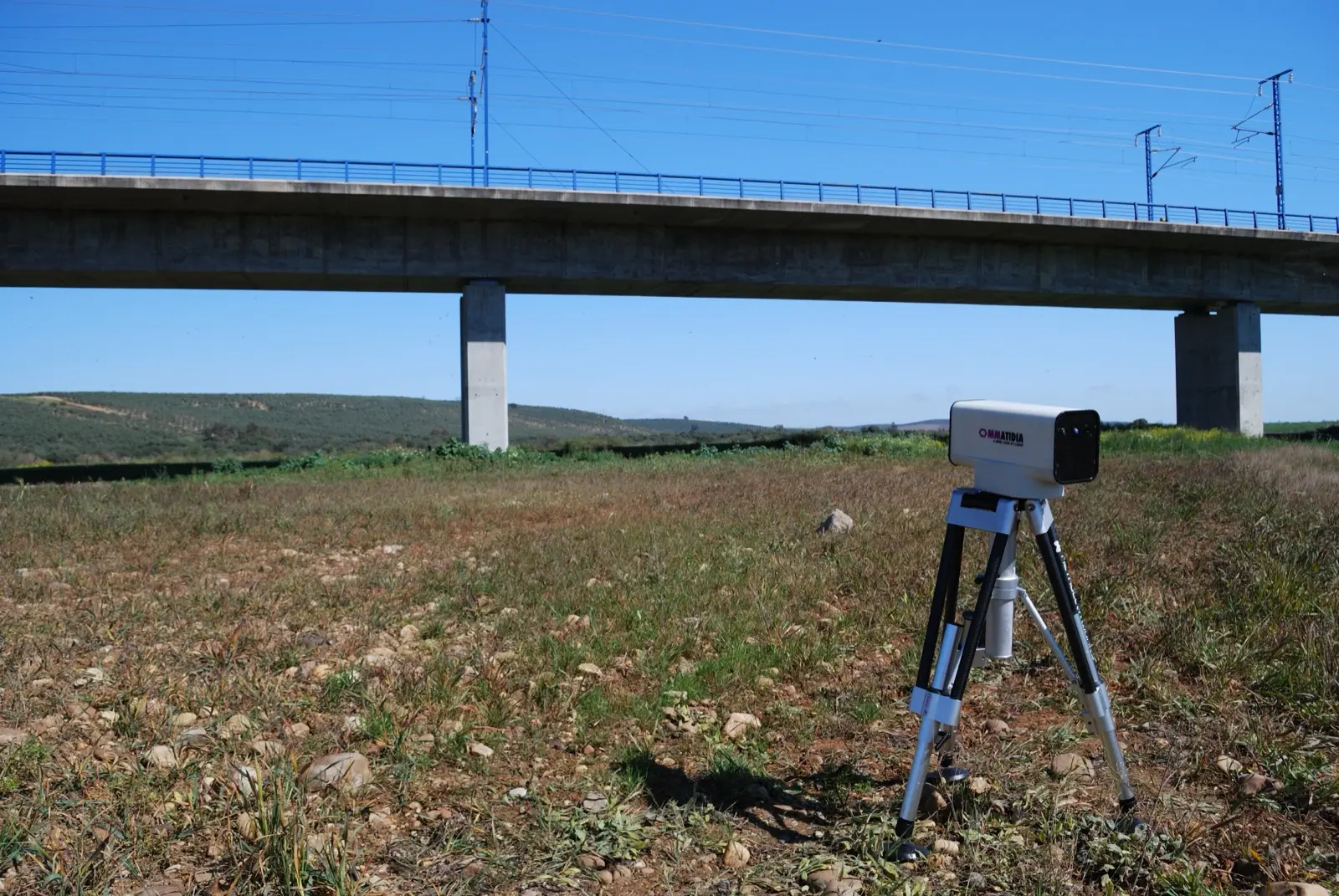
You need a field-ready system for industrial, infrastructure, and research environments.
What teams are actually buying
One platform, two decision paths
Capture dimensional data and remote vibration behavior from the same field-ready system.
Stand-off measurement workflow
Reduce repositioning and contact instrumentation effort on large assets and constrained sites.
Field-ready deployment
Use IP54 protection, portability, and atmospheric compensation in real operating conditions.
Software and reporting fit
Move from measurement capture to Ommatidia Atelier and broader CAD, BIM, or engineering workflows with less friction.
Core specifications
Metrology & coverage
| Measurement range | 0.5–50 m |
|---|---|
| Points per line | 128 |
| Acquisition speed | 128–25,600 points/s |
| Measurement accuracy | 20 µm + 6 µm/m |
| Angular range | 30° × 360° |
Vibrometry
| Array sampling frequency | 40 kHz |
|---|---|
| Array velocity range | Up to ±155 mm/s |
| Sensitivity | <50 nm/√Hz |
| Speckle management | IQ amplitude squelch + angular diversity |
| Integrated accelerometer | 2,000 Hz bandwidth; 4,000 Hz sampling |
| Network | Gigabit Ethernet |
| Synchronization | GPS, analogue and digital I/O |
| Calibration | – According to ISO 16063-41 |
Environmental & deployment
| Power consumption | 45 W |
|---|---|
| External-battery operation | 240 min |
| Dimensions (without battery) | 382 × 228 × 150 mm |
| Weight (without battery) | 7.5 kg |
| Environmental protection | IP54 |
Product and application views
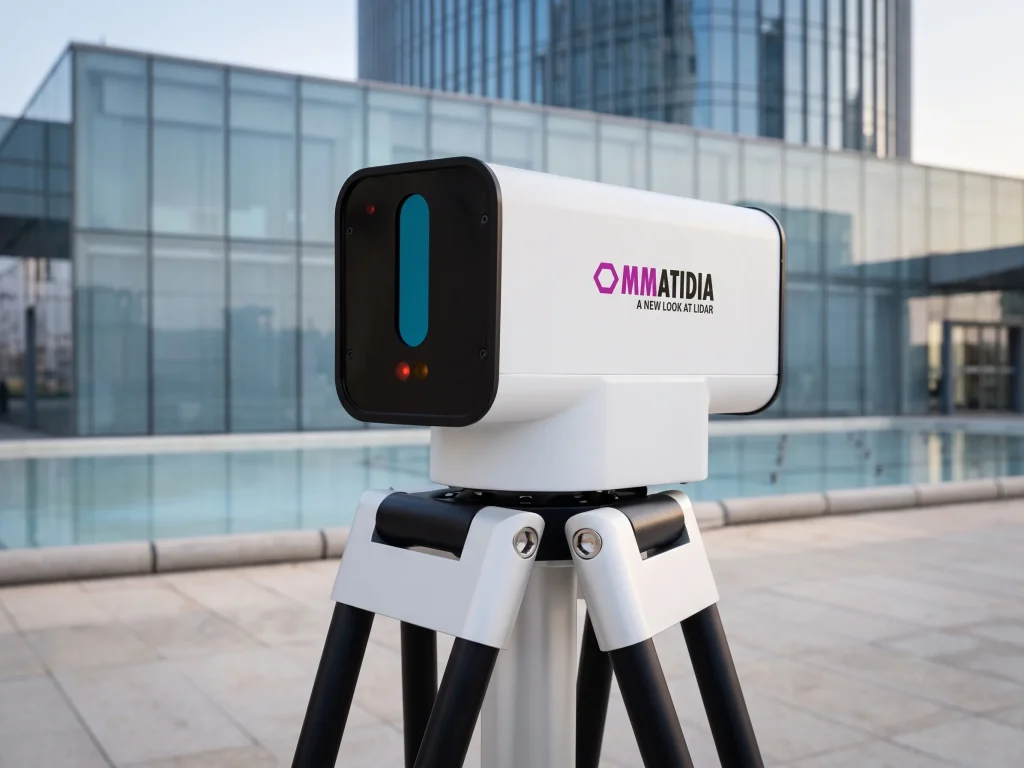
Q1 is not just a hardware view. Teams usually need to understand three practical outputs: how the system captures geometry on difficult targets, how it reveals vibration behavior without dense sensor installation, and how the data moves into engineering review.
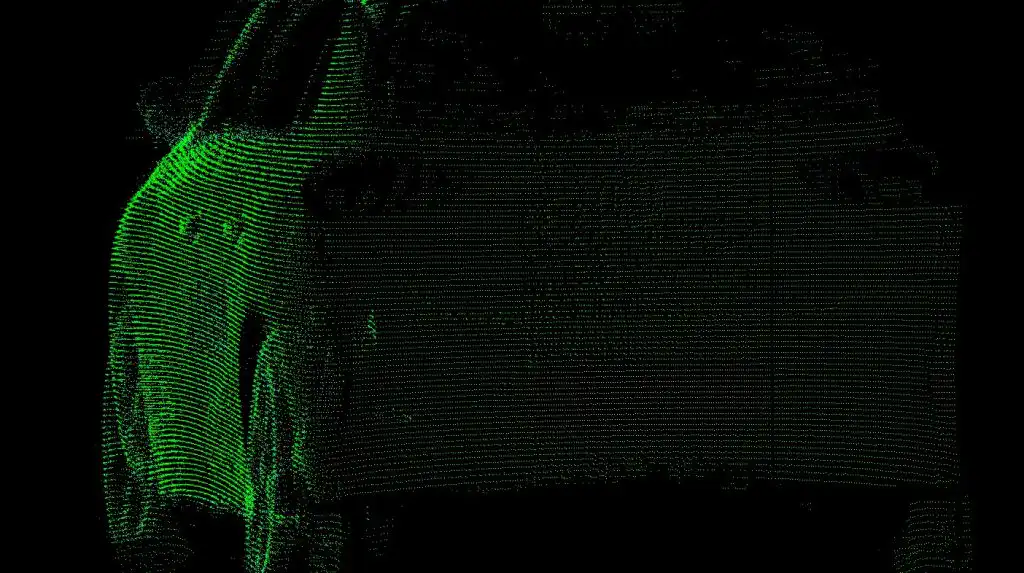
Geometry capture for large or difficult targets
This view shows where Q1 fits as a stand-off metrology tool: dense surface capture, fewer repositioning steps, and a cleaner path to dimensional review when access or target size makes conventional setups slower.
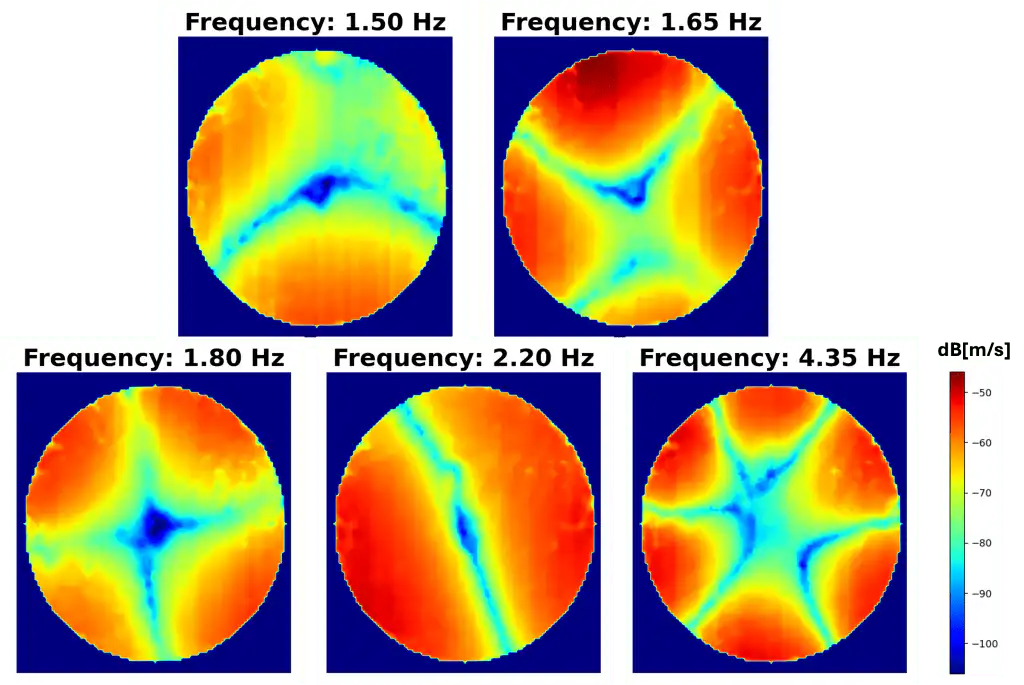
Full-field vibration and modal interpretation
The vibrometry view matters when the job is not only shape recovery but structural behavior. Q1 helps teams compare mode shapes, identify response patterns, and evaluate motion across the target without instrumenting every point.

Software review and reporting workflow
The software view shows how the measurement moves into Ommatidia Atelier for visualization, vibration analysis, reporting, and export into broader CAD, BIM, or engineering workflows. This is where the system stops being an isolated instrument and becomes part of the engineering decision path.
Questions teams ask before they qualify Q1
Related technical resources
Use these resources to plan the measurement method and output around your Q1 application.
- Laser RADAR fundamentals — how coherent Laser RADAR connects geometry and vibration measurement.
- Remote vibrometry and modal testing — a practical workflow for non-contact dynamic measurement.
- Laser vibrometer calibration — ISO 16063-41-aligned calibration information for measurement planning.
Q-series laser radar systems
Review the wider product family behind remote metrology and vibrometry workflows.
Full-field modal analysis
See how non-contact modal workflows move from capture to interpretation.
Application briefs
Explore additional vibrometry, metrology, and inspection use cases.
Evaluate Q1 against the real measurement job
Ommatidia Upgrade & Trade-In Program
Upgrade to Ommatidia’s latest Laser RADAR technology and unlock more capability for your next measurement challenge. Whether you are expanding an existing setup or replacing an older system, we offer tailored upgrade options with discounts of up to 40%.
If you are currently using another manufacturer’s system, send us your model and measurement requirements. We will review your trade-in possibilities, identify the best Ommatidia configuration, and outline a practical upgrade path for your team.