High-Speed 3D for Industrial Vibration Analysis
The system enables simultaneous interferometric distance and Laser Doppler velocity measurements, across 65 parallel sensing channels.
Key Facts
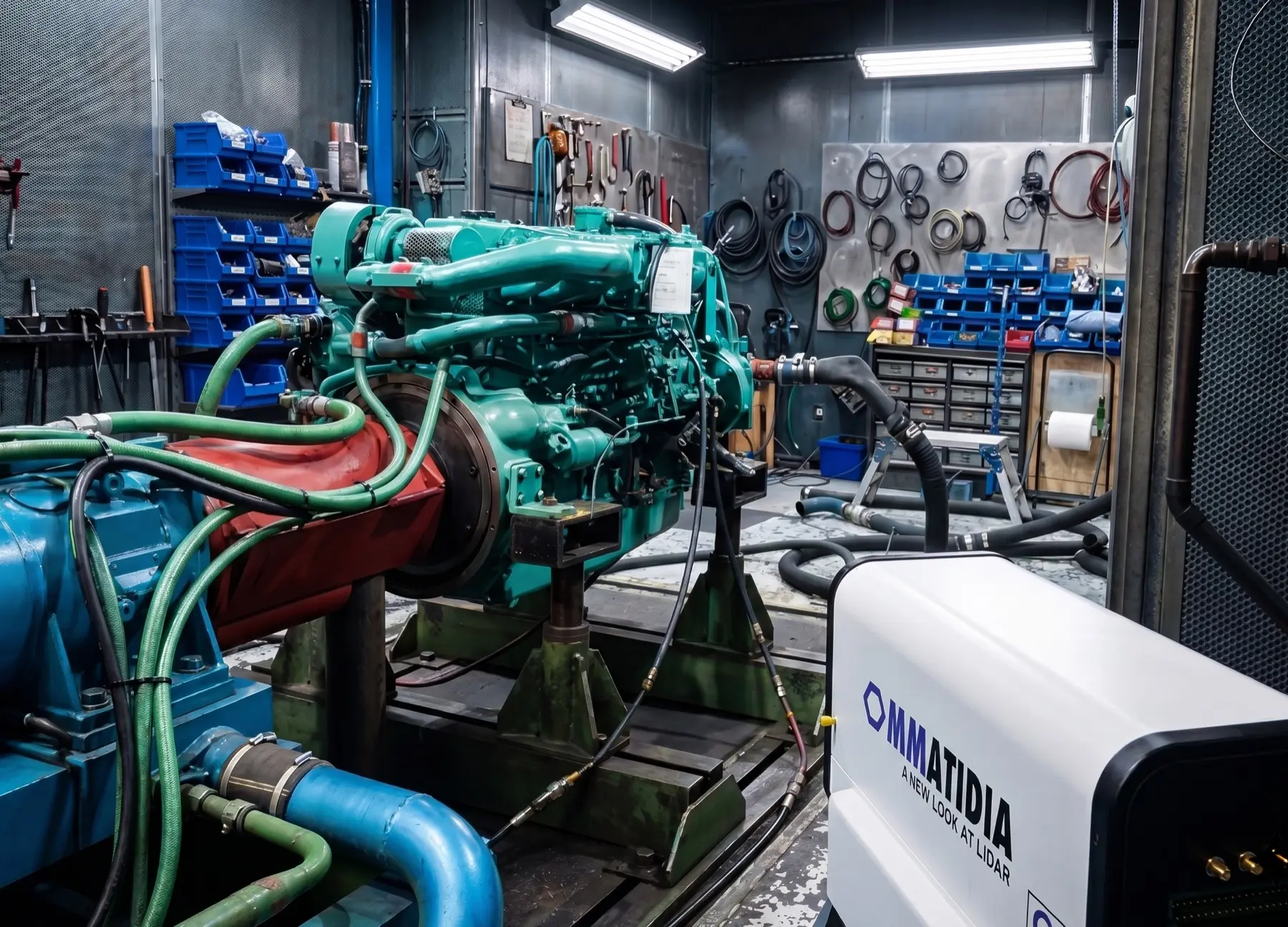
We present a novel High-Speed 3D vibrometry based on multi beam FMCW Laser Radar Technology. This Case Study on an industrial motor shows the system’s ability to identify fundamental and harmonic vibration modes, and localized hotspots.
Article PDF
Click below to download the Case Study
Vibration analysis is a fundamental tool for evaluating the dynamic characteristics of mechanical and structural systems, including natural frequencies, mode shapes, and damping ratios. These parameters are essential for understanding structural integrity, predicting failure modes, and optimizing mechanical design.
Traditional experimental modal analysis techniques rely primarily on accelerometer arrays or single-point laser Doppler vibrometers (LDVs), to capture vibration responses under controlled excitation.
While accelerometers provide robust and high-sensitivity measurements, their use requires physical contact with the structure, potentially affecting the measured dynamics, especially in lightweight or flexible components.
Single-point LDVs, on the other hand, offer contactless measurement and high precision but suffer from low spatial coverage and long acquisition times, as they typically scan one point at a time.
Recent developments in scanning LDVs and digital holography have improved throughput, but limitations remain in achieving real-time, wide-field measurements for large or complex geometries.
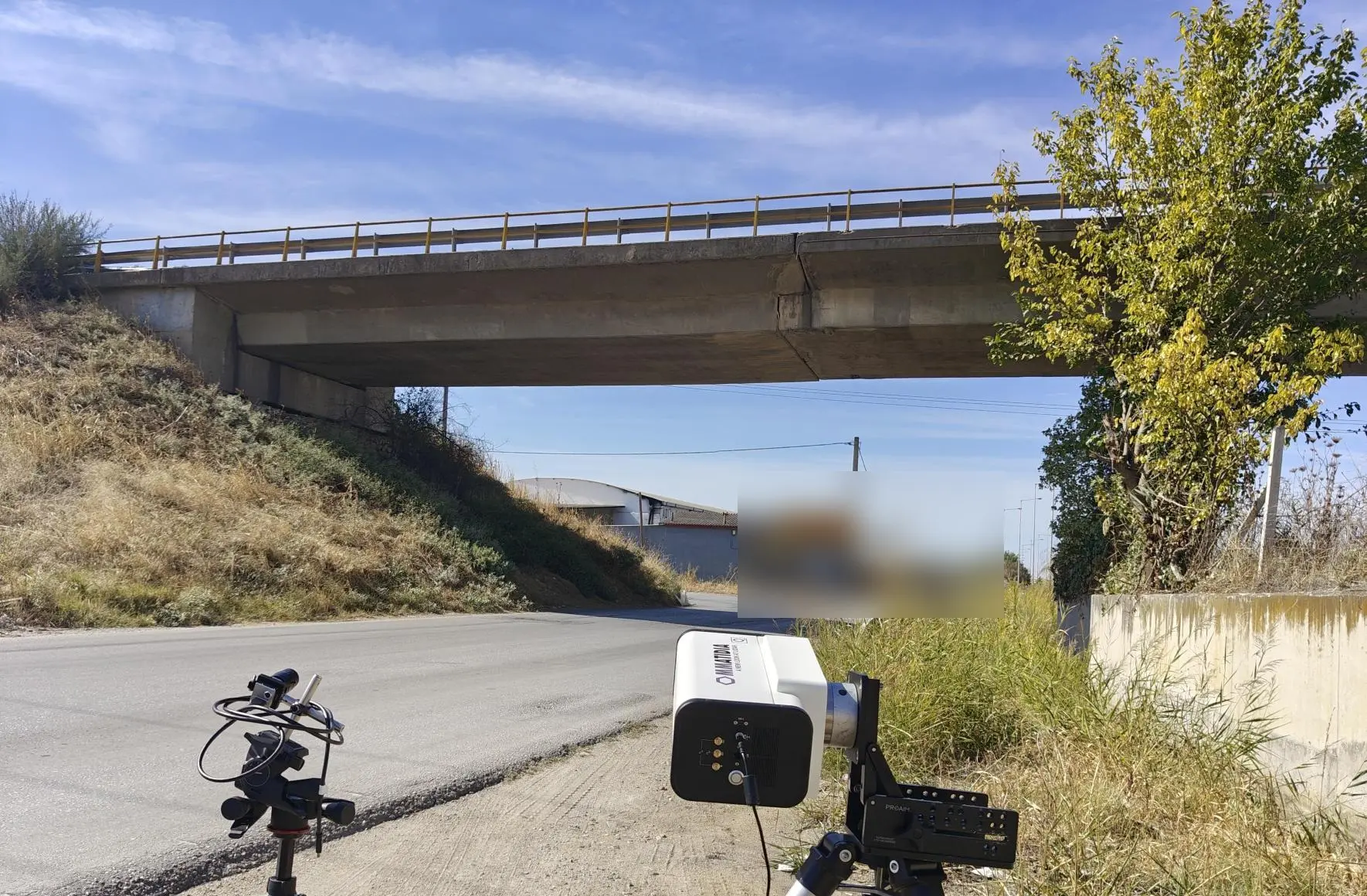
To address these challenges, Ommatidia has developed a multi beam frequency-modulated continuous-wave (FMCW) laser radar, that performs parallel interferometric distance and Doppler velocity measurements.
The system integrates 65 optical channels based on photonic chip technology, enabling simultaneous acquisition of three-dimensional geometry and vibration data, across the entire field of view.
This approach offers a unique combination of high spatial resolution, real-time performance, and robustness to industrial environments, making it well-suited for applications such as modal testing, structural health monitoring, and production quality control.
A novel High-Speed 3D vibrometry system based on multi-beam FMCW Laser Radar Technology
The device achieves a 50 meter range and provides co-registered 3D point clouds with vibration data, enabling accurate and contactless modal analysis.
Results confirm the suitability of this approach for industrial quality control, structural testing, and predictive maintenance.
Ommatidia Upgrade & Trade-In Program
Upgrade to Ommatidia’s latest Laser RADAR technology and unlock more capability for your next measurement challenge. Whether you are expanding an existing setup or replacing an older system, we offer tailored upgrade options with discounts of up to 40%.
If you are currently using another manufacturer’s system, send us your model and measurement requirements. We will review your trade-in possibilities, identify the best Ommatidia configuration, and outline a practical upgrade path for your team.