Stop spending hours preparing measurements with a single beam scanning laser Doppler vibrometer or mounting accelerometer networks across your test structure.
If you’re a structural dynamics researcher, civil engineer, or part of an aerospace/automotive testing lab, you know the traditional modal analysis bottleneck…
Measuring one point at a time turns every test into a multi-day project.
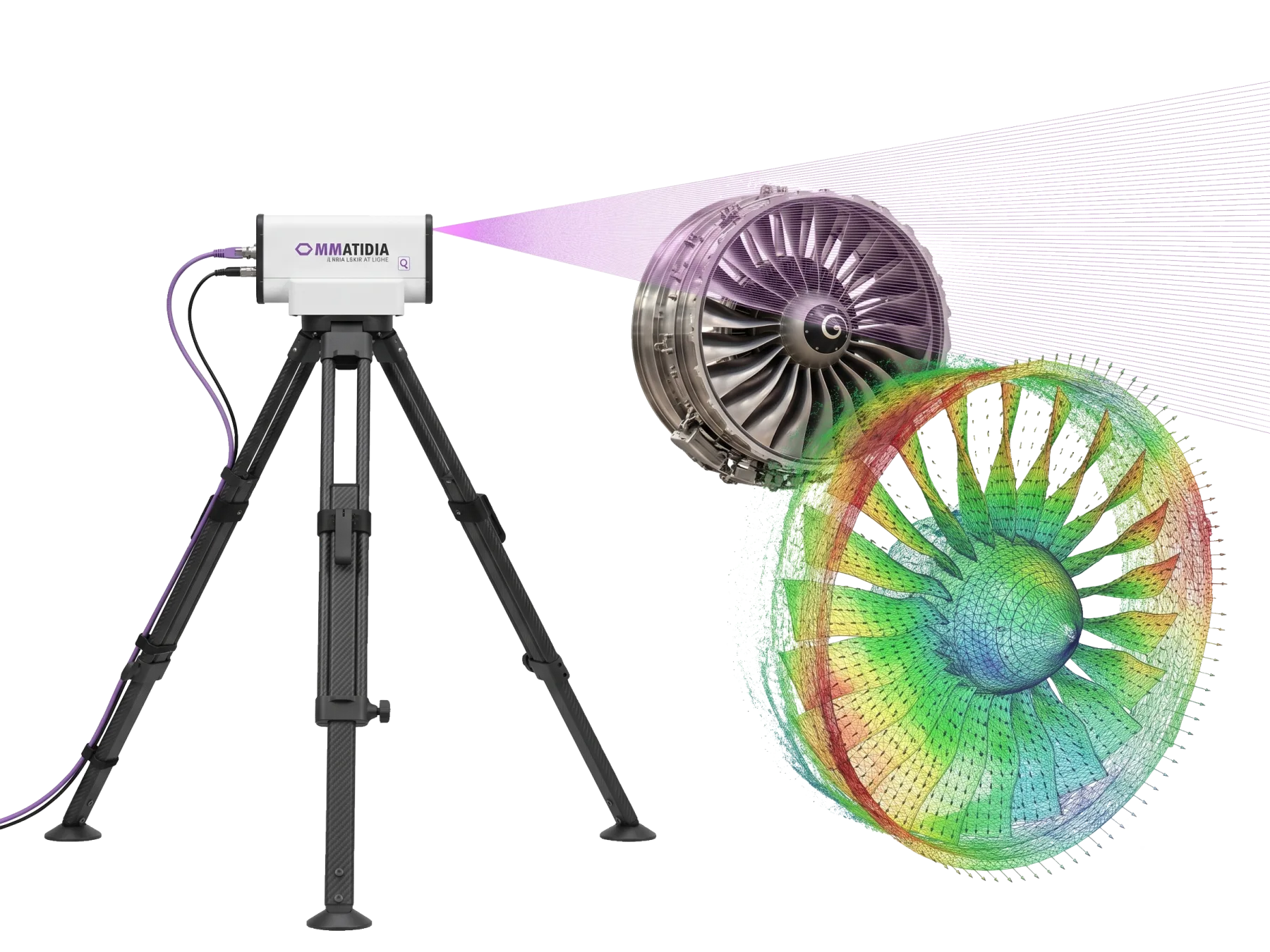
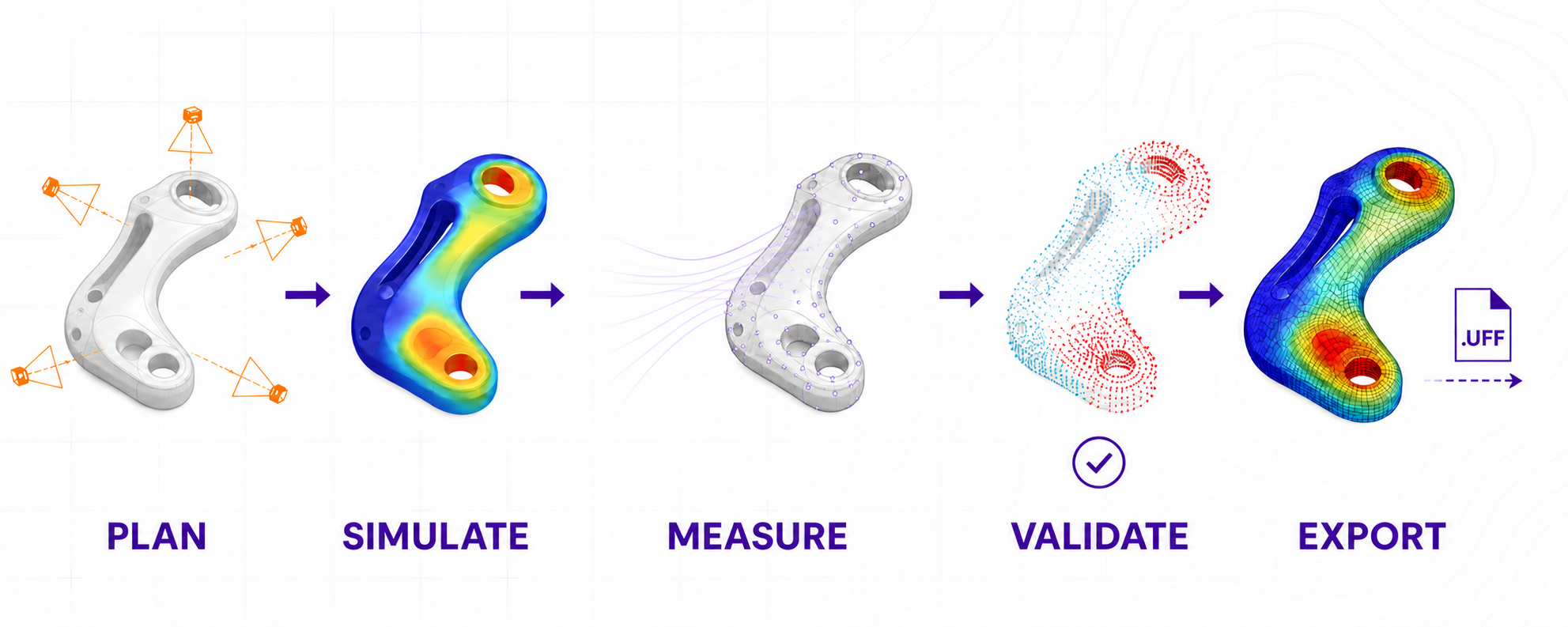
This walkthrough shows how to deliver full-field, quantitative modal results in approximately 20 minutes using parallel-beam laser radar from Ommatidia LiDAR’s Q2 platform.
Why Traditional Modal Testing Takes Too Long
When you need to understand how to measure vibration without contact, scanning systems seem like the obvious choice.
But the sequential nature creates unavoidable delays:
- Time constraints: A 100-point scan requires 100 separate accelerometers, or in the case of single beam scanning laser Doppler vibrometer, preparing a mesh to be scanned.
- Setup time: Whether mounting accelerometers or configuring scan patterns, preparation consumes hours before data collection even begins.
- Processing complexity: Aligning datasets, verifying phase relationships, and stitching results into coherent mode shapes adds another layer of delay.
For teams iterating designs or troubleshooting resonance issues under project deadlines, this timeline is unacceptable.
See Ommatidia’s Q2 Laser Doppler Vibrometer in action
Introducing The 20-Minute Modal Analysis Workflow
This walkthrough covers every step of the fast-track modal analysis process:
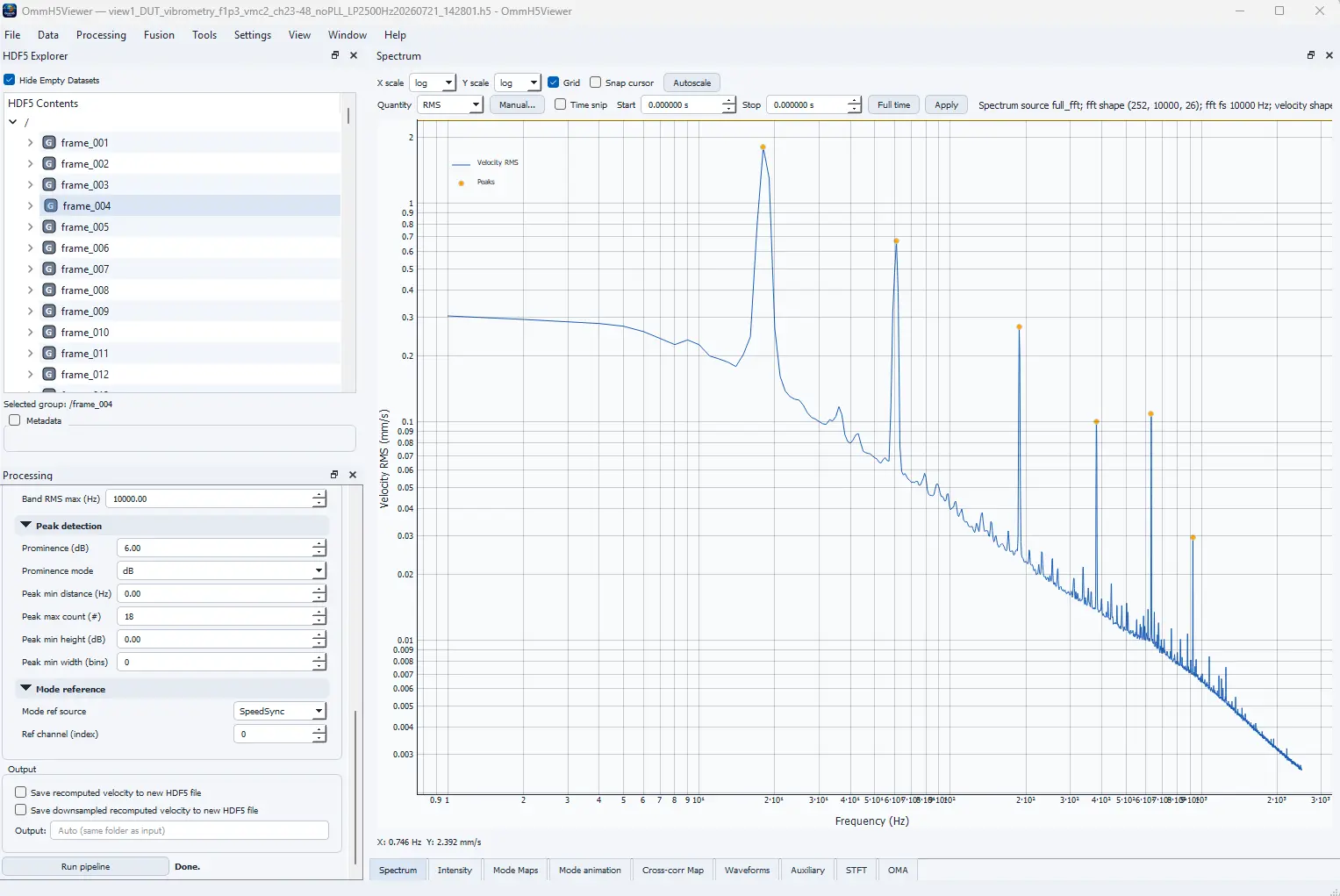
Position Ommatidia Q2 laser vibrometer at 1to 50 meters from your structure. The system’s laser radar metrology accuracy (~0.1 mm) ensures precise spatial registration without lengthy alignment procedures. Use the integrated camera to define your measurement region. Choose point density based on expected vibration patterns, typically linear frames from 65 to 520 points for component testing. Grid geometry exports as UFF set 55. Connect a reference sensor for synchronized triggering and force measurement. Optional but recommended for accurate FRF measurements. Excite using impact, shaker, or acoustic methods. The parallel architecture works with any excitation source – choose based on your test requirements. All frame channels capture vibration data simultaneously during one excitation cycle. Unlike scanning systems requiring repeated tests, parallel acquisition completes the spatial survey in a single run. Q2 Massively Parallel Laser Radar for 3D Vibrometry & Micron-Level Metrology Scanner by Ommatidia LiDAR Automated coherence verification validates measurement quality. The software flags poor signal channels for immediate retesting if needed.Step 1: Quick Setup
Step 2: Scanning Path and ROI Definition
Step 3: Optional Reference Signal for Synchronization
Step 4: Apply Excitation/Driving
Step 5: Parallel FRF Acquisition

Step 6: Coherence Checks
Step 7: Polyreference Curve-Fitting
Apply p-LSCF or other modal parameter estimation algorithms to extract natural frequencies, damping ratios, and mode shapes.

drive train rotating shaft vibration measurement at Maximum amplitude with Q2 laser radar
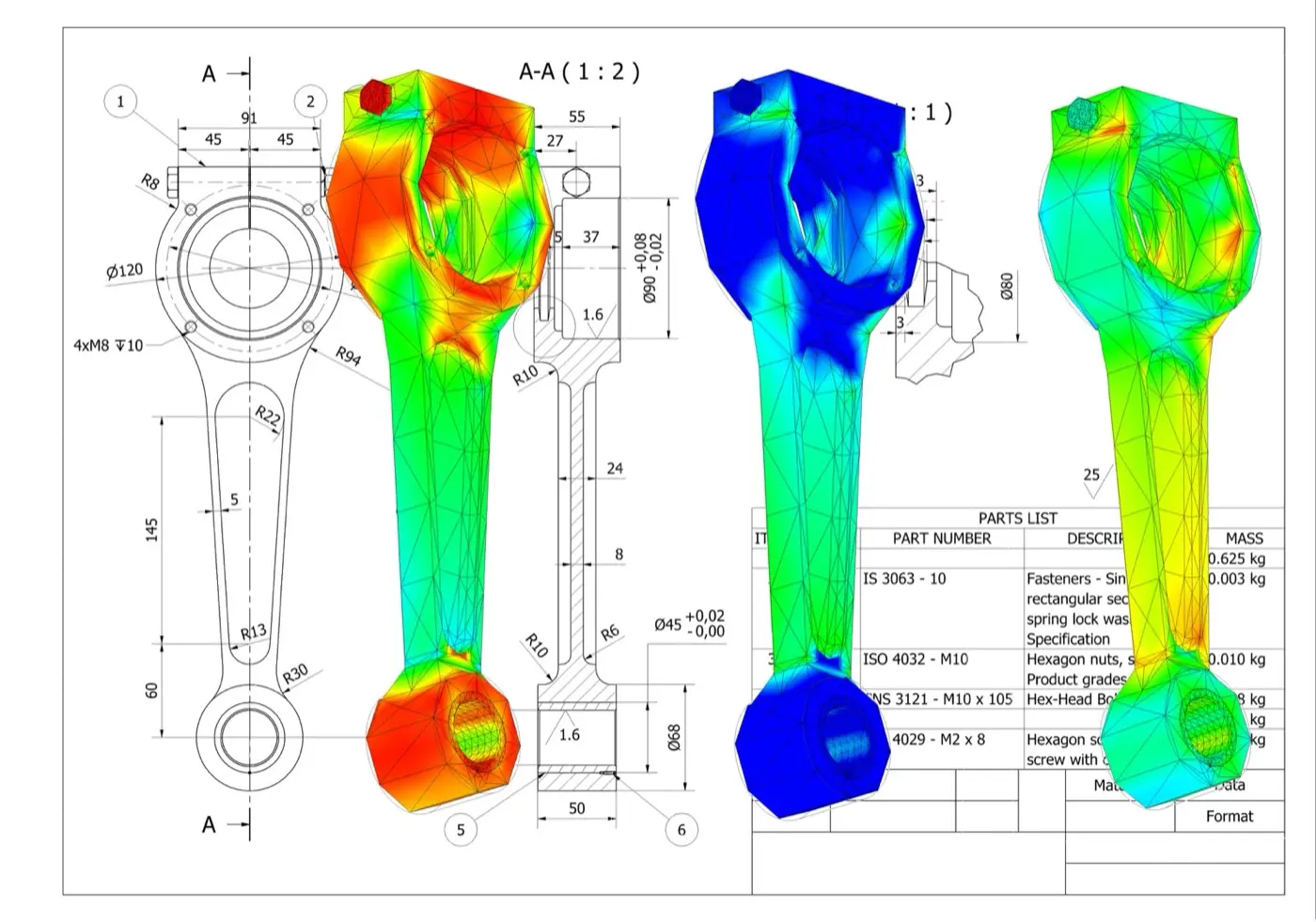
Step 8: Mode Visualization and MAC Verification
Review animated mode shapes with Modal Assurance Criterion verification. Results export as UFF set 58 (spectra/FRFs) for direct import into Artemis Modal and Siemens Testlab, or CSV for post-processing in MATLAB or Python.

APU testing _ Vibrational Modes and Pointcloud Mapping using Q Laser Radar
Total time: ~20 minutes from setup to verified modal parameters.
Learn More About Our Q2 System →
What 20 Minutes of Testing Delivers
True FRFs
Full frequency response functions, not just operational deflection shapes (ODS), suitable for model comparison and design validation.
Quantitative Modal Parameters
Natural frequencies, damping ratios, mode shapes, and participation factors with the same rigor as traditional multi-day tests.
Software-Ready Data
UFF/UNV format ensures seamless integration with your existing modal analysis workflow. Import geometry and FRF data without manual formatting.
No Mass Loading
Non-contact measurement preserves natural structural behavior – critical for lightweight aerospace composites and automotive structures.
How Researchers and Testing Labs Use 20-Minute Modal Analysis
Test wing sections, control surfaces, and fuselage panels without sensor networks. Multiple design tests completed in a single shift speed up certification timelines. Modal Analysis of an aircraft wings Academic and industrial labs gain ability to explore design variables that would be impractical with sequential measurement approaches.Aerospace Component Validation

Research Studies
Automotive NVH Testing
Validate EV chassis and carbon fiber structures without altering local stiffness. Test multiple scenarios and conditions in one day instead of one week.

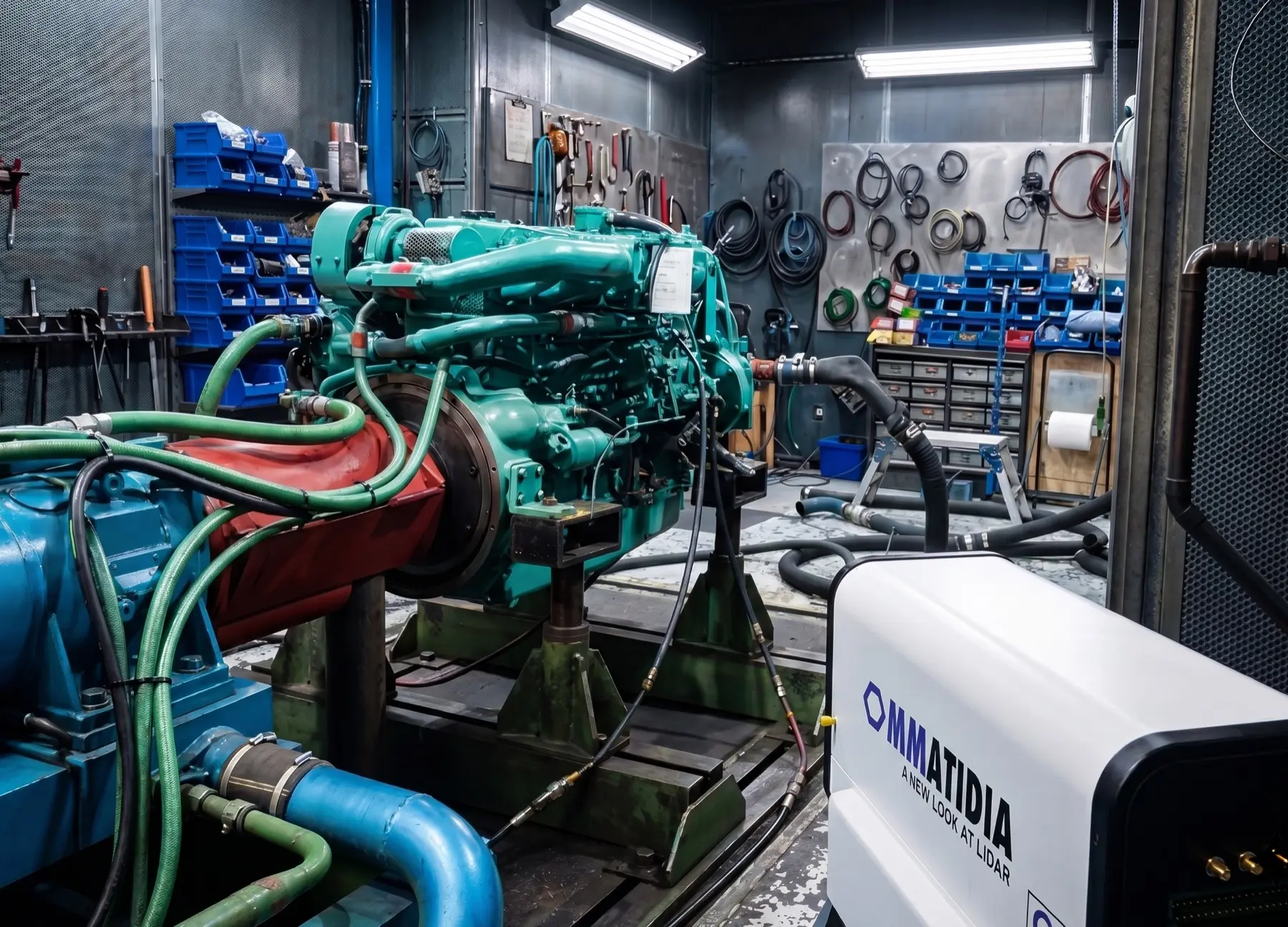
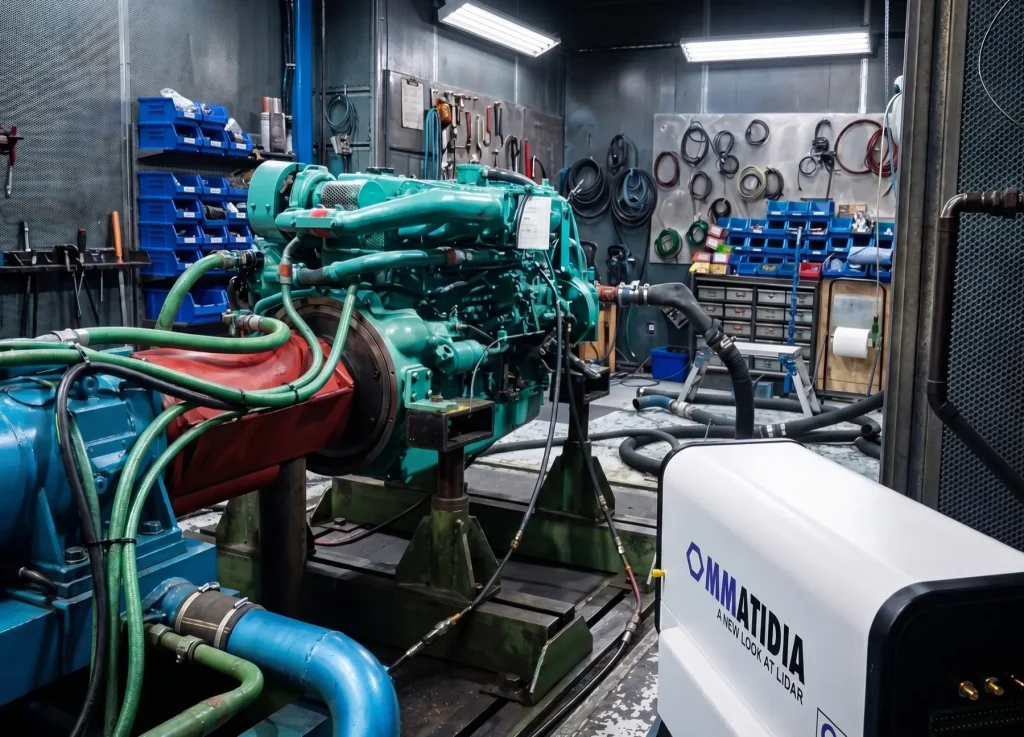
Dimensional and vibration measurement of an automotive engine
Civil Infrastructure Assessment
Assess bridge decks and building floors with portable equipment from safe standoff distances, eliminating access challenges on active structures.

Vibrations detection of a static wind tower
Final Thoughts
For structural dynamics teams where traditional modal analysis consumes days of calendar time, parallel beam laser radar offers quantitative results in approximately 20 minutes.
At Ommatidia LiDAR, we’ve designed the Q2 system to reduce test-bench times, simplify data handoff, and help teams focus on design improvement, not data collection.
To see the 20-minute workflow with your own test structure, request a demonstration or discuss integration with your existing modal analysis processes.
Visit ommatidia-lidar.com or email sales@ommatidia-lidar.com.