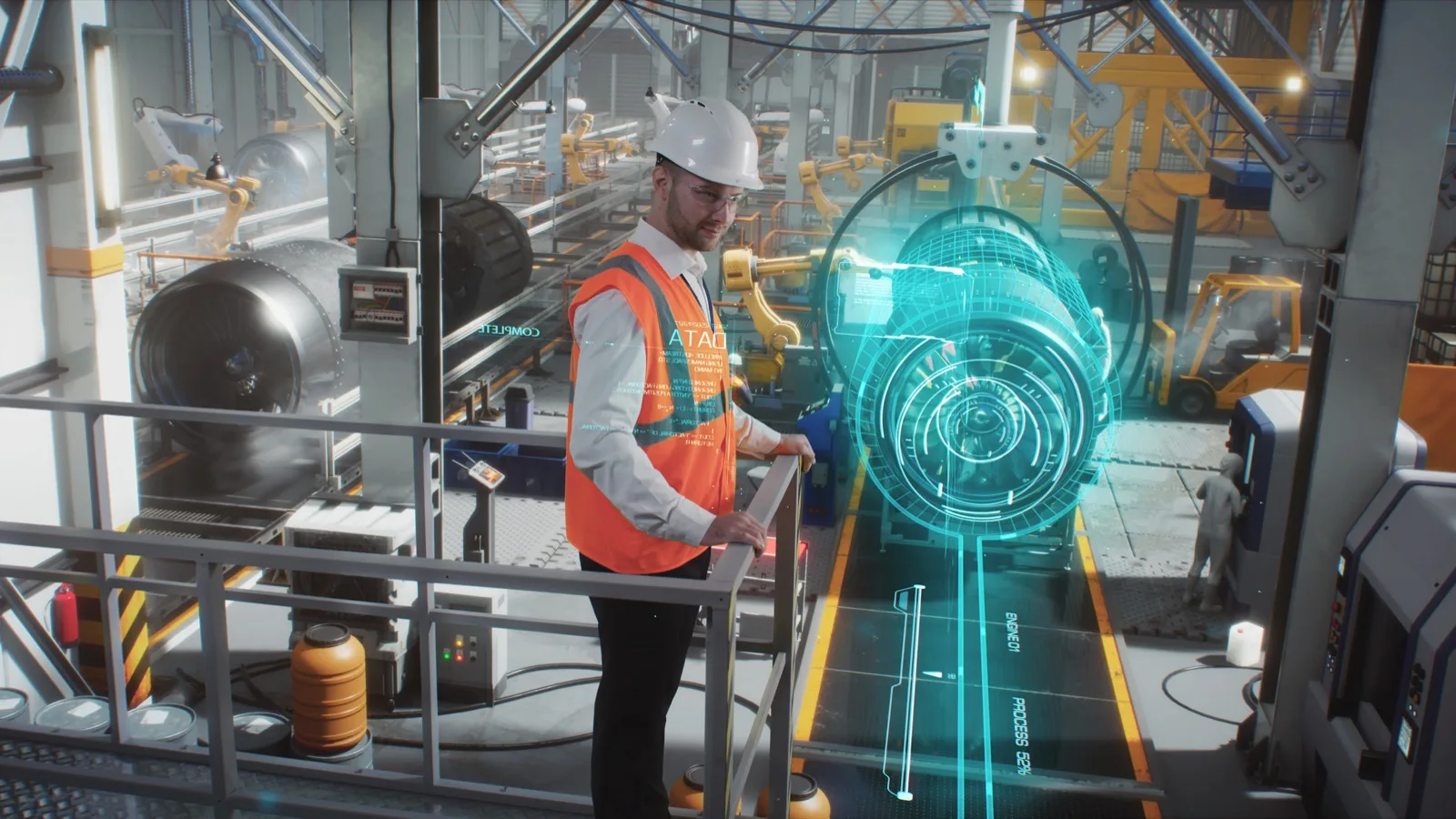
For R&D engineers, metrology specialists, and vibration testing experts, the challenge of capturing structural dynamics has always involved a fundamental trade-off. Traditional scanning laser vibrometers can provide high spatial resolution, but they collect data one point at a time. This one-at-a-time approach creates four key problems: In applications such as aerospace structural testing, automotive NVH validation, or structural health monitoring, those constraints prevent engineers from getting the measurements they need. This is where parallel beam laser radar architecture fundamentally changes what’s possible in non-contact vibrometry. This article explains how parallel beam laser radar works, why it outperforms scanned systems, and how Ommatidia’s Q1 and Q2 platforms deliver this capability.

Q2 Massively Parallel Laser Radar for 3D Vibrometry & Micron-Level Metrology Scanner by Ommatidia

The following graph show, the normalised instantaneous velocity data for all channels as a function of time. The raw data is measured in mm/s.
Why Parallel Beam Laser RADAR Outperforms Scanned Systems
Traditional scanned systems, like galvanometer-based laser vibrometers or mechanical laser trackers, measure one point at a time.
That approach can be precise, but it takes time, requires moving parts and can miss transient dynamics during vibration tests.
Parallel beam laser radar measures multiple points simultaneously.
With the Q1 (128 parallel channels) and Q2 (65 parallel channels), Ommatidia collects far more data, much faster:
- Massively parallel data collection: 65 or 128 of points measured at once to produce dense point clouds and vibration maps.
- Faster inspection cycles: Reduced acquisition times to minutes in field trials, so engineering teams iterate designs faster and perform more checks.
- Improved temporal fidelity: Measuring all points at the same moment preserves timing relationships needed for operational modal analysis (OMA).
Ommatidia’s systems are built around Photonic Integrated Circuit (PIC) technology that generates and manages multiple parallel laser beams simultaneously. Each beam works as an independent laser Doppler vibrometer, constantly measuring how fast the surface is moving using laser interferometry. The system projects a grid of laser beams onto the structure. When the surface moves, it changes the laser frequency (Doppler effect) based on the velocity. The PIC processes all channels at once, providing synchronized velocity or displacement data. Key advantages include: In field trials, switching from scanning to parallel systems cuts measurement time by over 70% while improving data quality. Learn More About Q1/Q2 Systems → Q2 Massively Parallel Laser Radar for 3D Vibrometry & Micron-Level Metrology Scanner by OmmatidiaHow Parallel Beam Laser RADAR Works


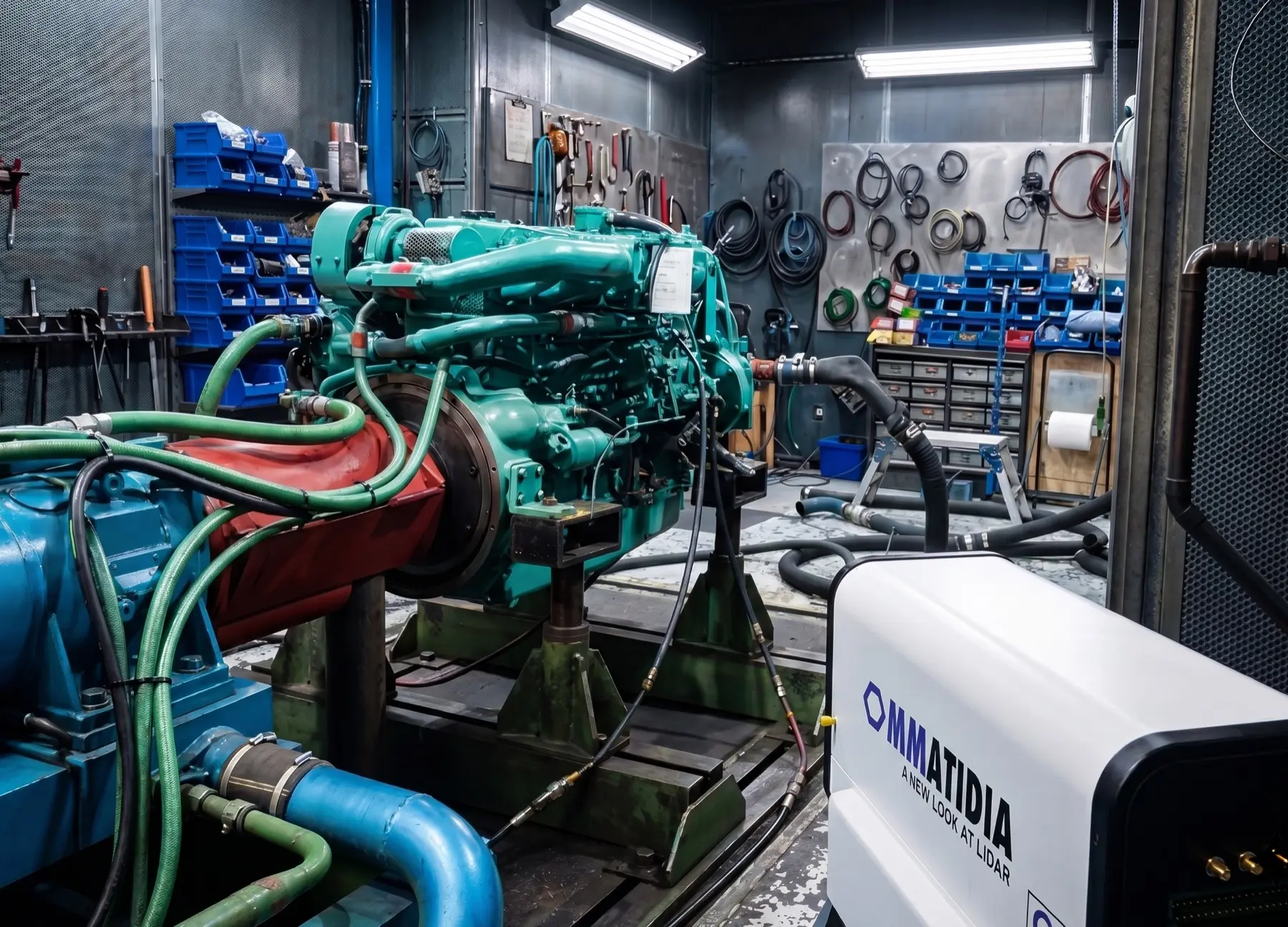
Ommatidia’s Q2 performing field measurements
Where Parallel Beam Laser RADAR Makes an Impact
Aerospace Ground Vibration Testing
The Q1 can capture complete aircraft modal shapes in one pass, eliminating accelerometer networks. Engineers can simultaneously obtain modal data and accurate 3D geometry for aeroelastic analysis.
Automotive NVH and Durability
Measuring EV frames and carbon fiber panels without contact finds problem frequencies without changing how parts behave. A manufacturer can cut validation time by 70% versus scanning systems.
Structural Health Monitoring
Bridge monitoring combines displacement and vibration data for operational modal analysis. Simultaneous multi-point measurement enables accurate modal reconstruction from remote positions.
Industrial Metrology
~0.1 mm accuracy matches high-end CMM precision for hard-to-reach surfaces. Works with coordinate measuring machines and robotic tools for complete measurement workflows.
During a recent aerospace campaign, a laboratory replaced its scanned LDV array with Ommatidia’s Q2. The scanned system required multiple sweeps and repeated excitations to reconstruct mode shapes. The Q2 acquired synchronized data across 65 channels in a single test. Results:Comparative Case Study: Parallel vs. Scanned
Looking Ahead: The Future of Parallel Beam Vibrometry
Key trends shaping the field include PIC-driven parallel measurement, wider adoption of non-destructive vibration testing in NDT workflows, and increasing reliance on dense point-cloud data for automated structural monitoring.
For teams evaluating next-generation measurement tools:
- Match measurement density to your needs: Parallel channels capture detailed data where scanning systems miss information between points.
- Choose non-contact methods: Preserve natural structural behavior during NVH and aeroelastic testing without added sensors.
- Consider PIC-based systems: Compact, deployable instruments with lower lifecycle costs.

Q2 Laser Radar enables NDT capturing of high-resolution vibrometry data
Final Thoughts
For teams handling structural testing, modal analysis, or industrial metrology where fast events, timing accuracy, or multi-point data matter, parallel beam laser radar offers a clear technical advantage.
At Ommatidia, we design measurement tools for capturing dense, repeatable, high-precision data from complex structures without contact or compromise.
To learn more about demonstrations, on-site trials, or application-specific guidance on integrating parallel beam laser radar into your testing workflow, contact our team.
Visit ommatidia.tech or email sales@ommatidia.tech.
Parallel measurement questions
See how simultaneous multi-point acquisition preserves timing, phase and spatial context for engineering analysis.
What does parallel Laser RADAR capture?
Parallel Laser RADAR measures many optical channels at the same instant, preserving timing and phase relationships across the target. The result is a synchronized spatial record of transient events, operating vibration and structural response.
How do Ommatidia Q1 and Q2 use parallel acquisition?
Q1 measures 128 points per line for portable geometry and vibration workflows. Q2 acquires 65 vibration channels simultaneously at 40 kHz and builds geometry-linked measurements with up to 1,300 points through 20 elevation positions.
Which workflows gain most from simultaneous measurement?
Parallel acquisition strengthens impact testing, operating deflection shapes, modal analysis, automotive NVH, rotating-machinery diagnostics and structural monitoring by capturing the complete event across every active channel.
What engineering outputs come from the measurement?
The synchronized dataset supports time histories, spectra, phase-consistent response maps, operating shapes and geometry-aware visualizations in Atelier and OmmViewer, ready for engineering review and export.